Stranger School: Prank Games
HyperFusion GamesSimulation
4.633.00 Reviews
- Version
- 1.7.2
- Installs
- 1.00M
- Age Rating
- Teen
Screenshots
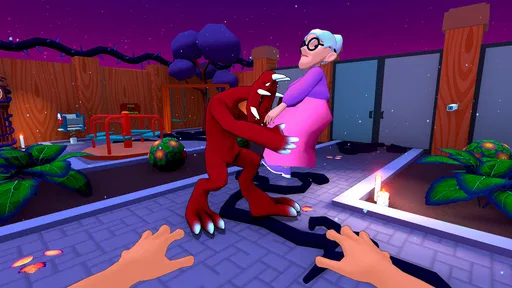
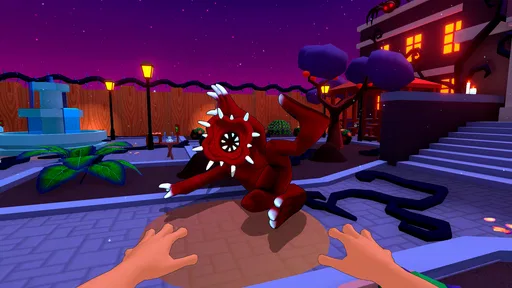
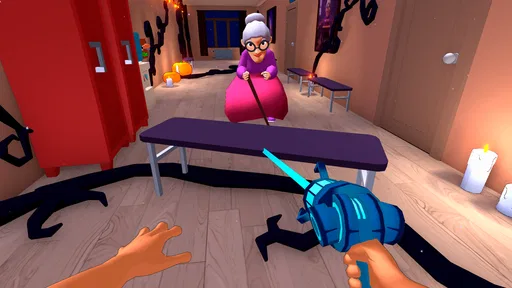
Our Review of Stranger School: Prank Games
 Analysis by Appyee
I went into Stranger School: Prank Games expecting a quick, silly school-themed game, and that is exactly where its strongest appeal lies. It is a free simulation game from HyperFusion Games built around mischievous situations, comic timing, and the pleasure of trying something slightly ridiculous without taking the experience too seriously. The Teen content rating is worth keeping in mind, but the overall tone is playful rather than demanding.
My first impression was that this is the kind of game that works best in short bursts. It is easy to understand, immediately more amusing than intimidating, and suited to the moment when I want something lighter than a strategy game or a long role-playing adventure. The real question, though, is whether the school-prank setup continues to feel entertaining after the initial novelty fades. In my experience, that depends less on the basic premise and more on how much patience I have for repeating the same style of joke.
What the first week feels like
The opening appeal comes from the contrast between an ordinary school setting and deliberately mischievous objectives. Instead of asking me to manage a serious institution or optimize a complicated simulation, the game frames school life as a playground for prank-driven challenges. That gives each session a clear emotional direction: I am not trying to be perfect, I am trying to see what kind of trouble the next situation creates.
That tone makes the game approachable. I do not need to spend a long time learning an elaborate ruleset before getting something out of it. The premise explains itself quickly, and the humor gives small tasks a reason to exist. For a player who enjoys casual simulation games but finds traditional management titles too slow, this is a more relaxed alternative.
During the first few sessions, I found the best rhythm was to play without rushing. The temptation is to treat every objective as a checklist, but the fun comes from noticing the setup and thinking about the prank as a little scene. That mindset matters because the game’s entertainment is not only in completing an action; it is also in seeing how the school environment turns a simple act into a comic moment.
A realistic use case is a short break between errands or classes. I can open it, play through a small portion of the school adventure, and put it down without feeling as though I have abandoned a large campaign. It is also a reasonable choice for someone who wants a humorous mobile game to share casually with a friend, especially when the appeal of the joke matters more than competitive depth.
The first-week experience is helped by the game’s clear identity. Many free mobile games mix several genres until their personality becomes difficult to recognize. Here, the prank-school idea is the center of attention. That focus is useful: I know what kind of mood I am getting before I start, and I can decide quickly whether that mood suits me.
Still, the same focus creates an early limitation. If school pranks are not naturally funny to me, there is not a second major layer waiting to rescue the experience. This is not the best pick for someone looking for deep construction systems, detailed character development, or a simulation that rewards careful planning over comic experimentation.
Why the novelty works at first
The game benefits from a low-pressure fantasy. I can act like a prankster without dealing with the real consequences of disrupting a classroom or annoying other people. That harmless distance is part of the appeal, and it gives the game a more playful feeling than a conventional school simulator.
One useful approach is to treat each session as a self-contained sketch rather than a serious progression task. I found that this prevents the game from feeling like work. If I start expecting every prank to deliver a major surprise, disappointment arrives quickly. If I instead enjoy the setup, the timing, and the absurdity of the situation, the first-week experience feels more consistent.
There is also a practical reason to keep expectations modest: a free game with optional purchases ranging from $1.99 to $11.99 per item may invite spending when I want to move faster or add convenience. I would recommend playing long enough to understand the natural rhythm before buying anything. That gives a better sense of whether the game itself has lasting appeal or whether the initial excitement is doing most of the work.
What remains after the first month
The month-to-month question is harder than the first-week question. A prank is often funniest because it is unexpected, and repeated exposure can reduce that effect. Once I understand the basic pattern of a school prank adventure, I begin judging the game by variety, pacing, and how often it gives me a reason to return instead of simply asking me to repeat a familiar routine.
That does not make the game disposable. Casual titles can have recurring value when they fit naturally into a player’s habits. For me, the strongest long-term use is occasional play: a few sessions when I want something cheerful, followed by time away. I would not make it the only game on my phone, but it can occupy a useful place beside more demanding games.
The distinction is important. A game like this does not need to become a daily ritual to be worthwhile. It can succeed as a low-commitment option that I revisit when I want humorous simulation rather than competition or narrative intensity. Trying to force a daily habit may expose repetition faster than simply returning when the mood is right.
Players who enjoy collecting every objective or replaying scenes may find more reason to stay than players who only want a single run through the premise. The game’s long-term value therefore depends on personal tolerance for repetition. I would recommend it more confidently to someone who enjoys experimenting with funny situations than to someone who needs constant mechanical evolution.
The published reception suggests that the game has already attracted a substantial audience, with over a million installs and an average rating of 4.6 from around 4,200 ratings. Those figures make it clear that the concept connects with many players, but they do not remove the central trade-off: broad appeal in the opening hours is not the same as endless variety.
Its current version, 1.7.2, gives the game a defined point of reference for anyone deciding whether to try it now. I would still judge it by personal fit rather than by version number. Updates can improve a mobile game’s freshness, but the underlying prank format remains the reason to install it, and that format either suits a player’s sense of humor or it does not.
How I would build a sustainable habit
I would avoid opening the game automatically every time I have a spare minute. That sounds counterintuitive for a casual title, but it helps preserve the novelty that makes the pranks enjoyable. Playing only when I actually want a light distraction keeps the experience from turning into another obligation.
A second useful habit is to stop after a satisfying sequence rather than continuing until the jokes feel predictable. This is especially relevant for a game built around comic surprise. Ending on a good moment gives the next session a better chance of feeling fresh.
I would also separate progress from spending. If a particular section feels slow, that is a reason to decide whether I still enjoy the game, not an automatic reason to purchase an item. The free entry point is valuable because it lets me test the game’s humor, pacing, and tolerance for repetition before I commit money.
For families, I would check the Teen rating before handing the game to a younger player. The prank theme may sound harmless, but the age label is the clearest signal that it is not intended for every child. I would also explain that the in-app purchases are optional spending choices, especially if the game is installed on a shared device.
Maintenance, friction, and reasons fatigue can set in
The maintenance burden is fairly low in the everyday sense: this is not a game that demands a complicated schedule, a team, or constant attention to a virtual economy. That makes it easier to keep installed than a demanding management simulation. I can leave it alone for a while and return without feeling that I have fallen hopelessly behind.
Its real maintenance cost is attention. The game needs the player to remain receptive to its style of humor. Once I have seen enough similar setups, I may need a longer break before another session feels rewarding. This is not a technical problem; it is the natural wear that affects any experience based heavily on surprise and comic escalation.
Another point of friction is the gap between a funny premise and genuinely varied play. A school-prank setting can produce memorable moments, but the setting alone cannot carry every session. If the tasks begin to feel like variations on one idea, I notice the structure more than the joke. That is when the game shifts from entertaining simulation to routine completion.
Short sessions help, but they do not solve everything. They reduce fatigue by limiting exposure, yet they can also make the game feel less substantial if I am looking for a deeper progression loop. Someone who wants a title to occupy a long evening may prefer a full management simulator, a story-led adventure, or a sandbox with more systems to manipulate.
The free price lowers the risk of trying it, but optional purchases create a decision point. I would not describe that as a reason to avoid the game outright; many players will be perfectly happy to use the free experience. The sensible approach is to identify what the purchase changes for my own enjoyment. If it only makes me continue a routine I already find repetitive, it is probably not solving the real problem.
Device compatibility is another practical advantage for many players. The game supports Android 7.0 and later, so it is not restricted to only the newest phones. Even so, I would keep expectations realistic on older hardware: a compatible operating system means the game can run within its stated requirements, not that every older device will deliver the same comfort or responsiveness.
Who should skip it
I would skip this game if I want a serious school simulation with timetables, budgets, staffing, or long-term institutional strategy. The prankster fantasy points in a much sillier direction. I would also skip it if I dislike humor based on disruption, embarrassment, or playful rule-breaking, because those ingredients are central to the experience rather than occasional decoration.
It is a weaker choice for players who need a strong reason to log in every day. The game can support casual return visits, but I would not install it expecting it to replace a deeper long-term hobby. A more system-heavy simulation is likely to be better for someone who enjoys optimization, planning several steps ahead, and seeing complex choices produce lasting consequences.
Likewise, players who prefer quiet, relaxing simulations may find the prank framing too active or juvenile. The game’s charm comes from mischief, not calm routine. That difference is easy to overlook when choosing from a store page, but it becomes obvious within the first sessions.
How it compares with familiar simulation alternatives
Compared with a traditional management simulation, this game is faster to understand and less demanding to maintain. I do not need to build a detailed strategy around resources or long-term efficiency to enjoy a session. The trade-off is that I get less depth and fewer meaningful systems to master.
Compared with a story-focused adventure, the emphasis here is on the prank situation rather than on a carefully developed plot. That makes it easier to dip into, but it may feel less emotionally involving for players who want characters and narrative consequences to drive the experience.
Compared with a sandbox game, the school setting gives the experience a tighter identity. A sandbox may offer more freedom, but it can also take longer to become entertaining. This game gives me a clearer direction quickly, while asking me to accept a narrower range of activities.
That trade-off is why I see it as a companion game rather than a universal replacement. It is good at providing a compact dose of comic mischief. It is not trying to be the deepest simulation on a phone, and I would not recommend judging it by that standard. The better question is whether its focused style earns a place in the moments when I want something uncomplicated.
Practical choices before installing
The game is free to start, which makes a trial straightforward. I would play several sessions before deciding whether its humor holds up for me. I would pay attention to whether I am curious about the next situation or merely continuing because I have already started. That small distinction is a reliable test of recurring value.
I would also decide where it belongs in my rotation. If I already have several casual prank or comedy games, the overlap may make this one feel less necessary. If my current collection is mostly competitive, strategic, or story-heavy, its lighter tone could provide useful contrast.
For a shared family device, I would review the Teen rating and keep purchases under control. For an older Android phone, I would make sure it meets the Android 7.0 minimum before expecting a smooth installation. These are simple checks, but they prevent the common mistake of choosing a game solely because the premise sounds entertaining.
The developer, HyperFusion Games, has given the title a clear personality rather than hiding it behind a broad genre label. That helps me decide quickly. I know I am choosing a mischievous school adventure, not a conventional educational product or a realistic school-management tool.
My long-term verdict
After the novelty fades, Stranger School: Prank Games earns lasting space only if I treat it as an occasional comedy game instead of a mandatory daily routine. Its first-week appeal is genuine: the school setting is easy to understand, the prank concept is immediately readable, and the free entry point makes experimentation painless.
Its weaker side appears when I demand constant freshness. Repeated comic structures can lose their impact, and players searching for deep simulation systems will likely outgrow it. The maintenance burden is not time or complexity; it is managing my own exposure so that the humor does not become background noise.
I would recommend it to someone who wants short, playful sessions and enjoys seeing ordinary school situations turned into mischievous challenges. I would be more cautious with anyone seeking a long campaign, serious management, or a game that supplies a strong daily habit without effort.
My final view is positive but measured: this is a worthwhile free download for the right mood, not an essential replacement for every other simulation game. Try it without spending first, keep sessions focused, and judge it by whether you still feel curious after the initial jokes have landed. If that curiosity remains, the game can stay in a casual rotation for a long time. If it disappears, taking a break or choosing a deeper alternative will be the better decision.
Verdict
Strengths of Stranger School: Prank Games
- Easy-to-learn prank gameplay suitable for quick casual sessions.
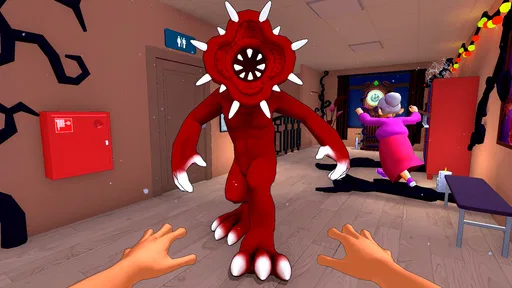
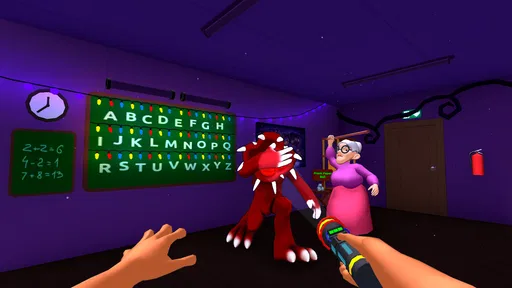
- Cartoon-style visuals make the school setting colorful and approachable.
- Multiple prank scenarios provide variety beyond a single challenge type.
- Simple controls work well on touchscreens, including smaller phones.
- Offline play may be convenient when you have no internet connection.
Limitations of Stranger School: Prank Games
- Gameplay can become repetitive once the available prank patterns feel familiar.
- Some levels may rely more on trial and error than strategic planning.
- Frequent ads can interrupt progress, especially between completed stages.
- The humor may feel immature or unsuitable for younger children.
- Performance may vary on older devices during busier school scenes.
Other Releases by HyperFusion Games
View All
Car Crash Simulator
Racing4.3
Similar Picks in This Category
View All
Truckers of Europe 3
Wanda Software4.3

Town Building Life Simulator
XGame Global4.2

Fidget Toys Trading・Pop It 3D
Freeplay Inc4.7

Sculpt People
CrazyLabs LTD4.4

Scary Teacher 3D
Z & K Games4.2

Hair Tattoo: Barber Shop Game
CASUAL AZUR GAMES4.3
Frequently Asked Questions
What is Stranger School: Prank Games about?
Stranger School: Prank Games is a casual mobile game centered on humorous school scenarios, mischievous challenges, and prank-style interactions. Players typically explore different situations, complete objectives, and trigger funny reactions from characters. The experience is designed for short play sessions and focuses more on entertainment, experimentation, and cartoon-style comedy than on a complex story or demanding gameplay system.
How do you play Stranger School: Prank Games?
Gameplay usually involves tapping objects, selecting actions, and interacting with characters or elements in each school scene. The goal is to discover the correct sequence of actions to complete a prank or solve a small challenge. Some levels may require trial and error, so observing the environment carefully is important. Controls are generally simple and suitable for casual players.
Is Stranger School: Prank Games free to download and play?
The game can generally be downloaded without an upfront purchase, but availability of optional in-app purchases may depend on the version and platform. Free games of this type may also include advertising, such as banners or rewarded videos. Before installing, users should check the store listing for current pricing details, ads, purchase options, and any age or content notices.
Does Stranger School: Prank Games require an internet connection?
Basic levels may be playable without a constant internet connection, especially if the required game content has already been installed. However, an internet connection may be needed for advertisements, reward videos, updates, analytics, or restoring purchases. Offline behavior can vary between Android and iOS versions, so it is best to test the game after installation if you plan to play while traveling.
Is Stranger School: Prank Games suitable for children?
The game uses a playful school setting and cartoon-style prank situations, but parents should still review the store rating, advertising policy, and in-app purchase settings before allowing younger children to play. Prank humor can vary in tone, and some actions may not represent behavior parents want children to imitate. Using parental controls and disabling unauthorized purchases is recommended for family devices.
Play our best games!


